
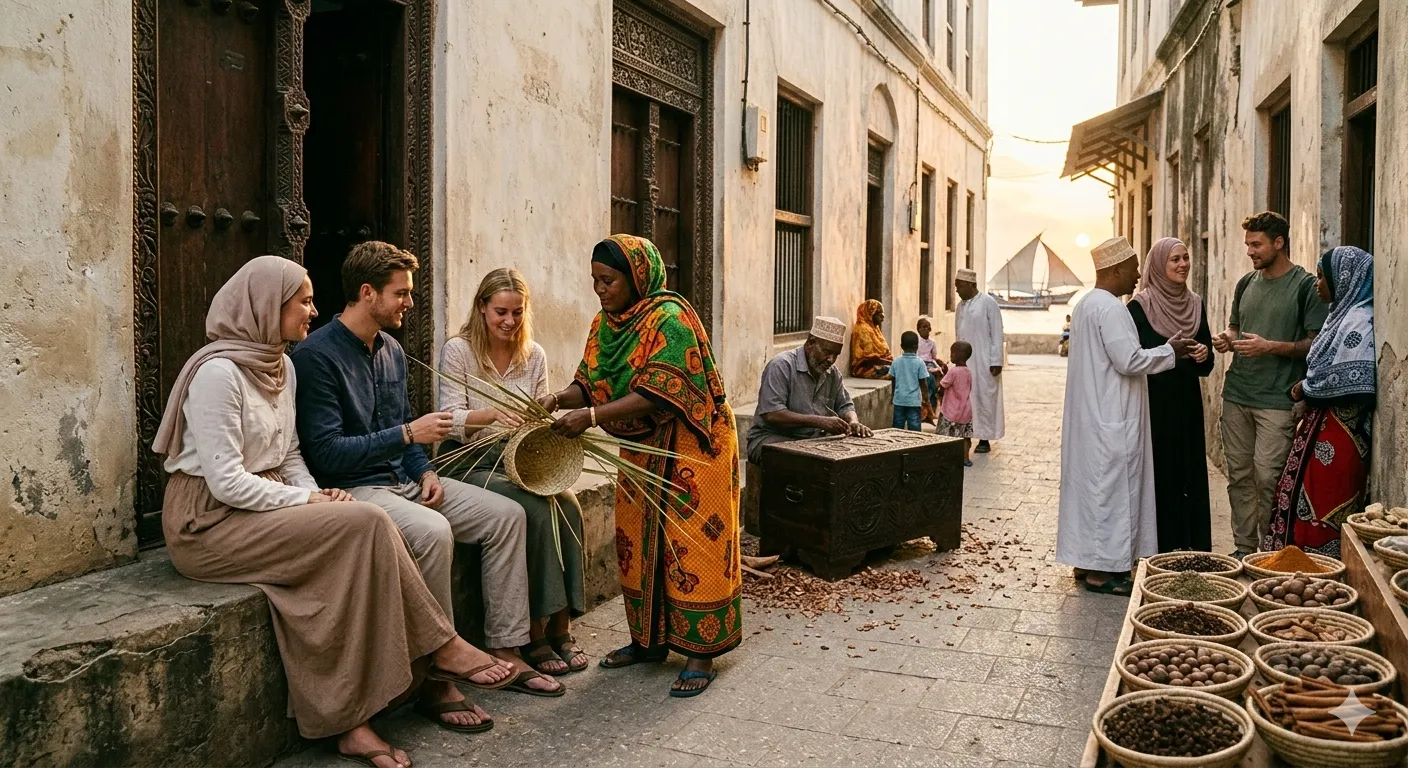
When most people think of Zanzibar, they see turquoise water and white sand. But if you turn your back to the ocean for a moment and head inland—or deep into the narrow limestone alleys of Stone Town—you’ll find the island’s true heartbeat.
Zanzibar isn’t just a destination; it’s a crossroads. For over a thousand years, African, Shirazie, Indian, and European cultures have collided here, leaving behind a “Swahili” way of life that is visible in every carved door, every cup of spiced coffee, and every greeting exchanged on the street.
If you want to experience the culture that makes this island more than just a beach resort, here are the experiences that get you under the skin of Zanzibar.
1. Getting Lost in the Labyrinth of Stone Town
Stone Town (Mji Mkongwe) isn’t a museum; it’s a living, breathing neighborhood. The best way to see it isn’t with a rigid map, but by simply wandering.
The first things you’ll notice are the Zanzibar Doors. These massive, intricately carved teak entrances tell a family’s history—brass studs to deter war elephants (an Indian influence) or flowing floral patterns representing the Quran (an Arabic influence).
The local vibe:
- Stop by Jaws Corner, a small plaza where men gather to drink bitter ginger coffee and play Bao (a traditional board game).
- Listen for the “Adhan” (call to prayer) echoing from dozens of minarets at once.
- Wait for the “Golden Hour” when children play soccer on the waterfront and the scent of frying Bibi Maandazi (sweet coconut bread) fills the air.
2. The Spice Legacy: More Than Just a Tour
Zanzibar didn’t get the nickname “The Spice Island” by accident. In the 19th century, this was the clove capital of the world. While many “spice tours” can feel a bit touristy, the real value is in understanding how these plants shaped the island’s identity.
Walking through a local shamba (farm) is a sensory overload. You’ll see how vanilla vines climb mahogany trees, how “lipstick trees” (Bixa orellana) provide natural dye, and how cloves—the island’s “Black Gold”—are harvested.
It’s one of those experiences where you realize that the cinnamon in your cabinet back home didn’t just come from a jar—it came from a massive tree bark that smells like a warm hug when it’s fresh.
3. The Art of the Dhow: Nungwi’s Shipyards
In the northern village of Nungwi, the culture is tied directly to the timber and the tide. For centuries, craftsmen have built Dhows—the traditional wooden sailing vessels of the Indian Ocean—using only hand tools, fire to bend the wood, and shark oil to waterproof the hull.
Walking through the shipyards, you’ll hear the rhythmic thwack-thwack of hammers against mahogany. There are no blueprints here; the knowledge is passed from father to son through memory and muscle. Watching a dhow take its first dip into the ocean is a communal event that feels like a victory for the whole village.
4. Seaweed Farming in Jambiani
On the low-tide flats of the East Coast, particularly in Jambiani, you’ll see rows of wooden stakes sticking out of the shallow water. This is the world of Zanzibar’s seaweed farmers—mostly women who work the “ocean fields” every day.
This is a side of Zanzibar culture that is often overlooked. It’s a story of resilience and community. These women harvest the seaweed to make everything from soaps to skincare products. Taking a moment to sit with them, learn how they tie the seedlings, and understand how the ocean provides for their families is a grounding experience that shifts your perspective on “island life.”
5. The Evening Ritual at Forodhani Gardens
As the sun dips below the horizon, Stone Town’s waterfront transforms into Forodhani Gardens. This isn’t just a food market for tourists; it’s a social ritual for locals.
The air becomes thick with the smoke of charcoal grills. You’ll find:
- Zanzibar Pizza: A unique, savory-sweet crepe that has become a cult favorite.
- Urojo (Zanzibar Mix): A tangy, flour-based soup with crispy fritters and spicy chutney. It’s the ultimate comfort food.
- Fresh Sugarcane Juice: Pressed right in front of you with a twist of ginger and lime.
Grab a plate, find a spot on the sea wall, and watch the world go by. It’s loud, it’s crowded, and it’s the best place on the island to see the community come together.
How to Respect the Vibe
Zanzibar is a conservative, predominantly Muslim society. The culture is incredibly welcoming, but it’s built on a foundation of “Heshima” (Respect).
A few tips for a better cultural connection:
- Dress modestly: When you’re in Stone Town or local villages, keep your shoulders and knees covered.
- Ask before you snap: Most people are happy to be in a photo, but asking “Naomba kupiga picha?” (May I take a photo?) goes a long way.
- Embrace “Pole Pole”: Things move slowly here. Don’t fight the pace; join it.
Experience the Heart of the Island
Zanzibar’s beauty is more than skin deep. It’s in the stories of the people, the history of the stone, and the flavor of the food.
Whether you want to:
- Walk the historic streets of Stone Town with a local guide
- Visit a traditional village to see age-old crafts
- Or taste your way through a spice farm
👉 Get in touch with us, and we’ll help you arrange a cultural journey that goes beyond the postcards and into the real Zanzibar.