
Choosing a place to stay in Zanzibar is the most important decision you’ll make for your trip. Because the island is large and the infrastructure varies, your choice of accommodation dictates whether you’ll be spending your days swimming, kitesurfing, or exploring 200-year-old alleys.
This guide breaks down the island by its unique regions and, more importantly, the specific styles of accommodation you’ll encounter in each.
1. Stone Town: The “Sultan Style” Heritage Stay
Best for: History buffs, foodies, and those who want an authentic cultural “landing.”
In Stone Town, you aren’t staying in modern hotels; you’re staying in restored Omani merchant houses. These buildings are architectural marvels—narrow, tall, and made of coral rag and lime.
- The Experience: Expect heavy, intricately carved Zanzibar doors, steep “staircase-climbing” workouts, and four-poster beds draped in mosquito netting.
- The Highlights: Most of these boutique hotels feature rooftop restaurants. There is nothing quite like having breakfast while watching the dhows sail in and hearing the call to prayer echo across the rooftops.
- What to look for: Seek out “Heritage Boutique” stays. If the hotel doesn’t have a rooftop terrace, you’re missing 50% of the Stone Town experience.
- Top Area: Stay near Shangani or the Old Fort to be within walking distance of the beach and the night market.
2. Nungwi & Kendwa: The “Blue Water” Beach Hubs
Best for: Social travelers, sunset seekers, and 24/7 swimmers.
This is the only part of the island where the tide doesn’t “disappear.” If you want that classic “Maldives-style” turquoise water at any time of day, this is your zone.
- Accommodation Style – Large Resorts: This is the land of the All-Inclusive. These are massive properties with multiple pools, buffet dining, and private beach stretches. They are perfect for families or those who want zero stress.
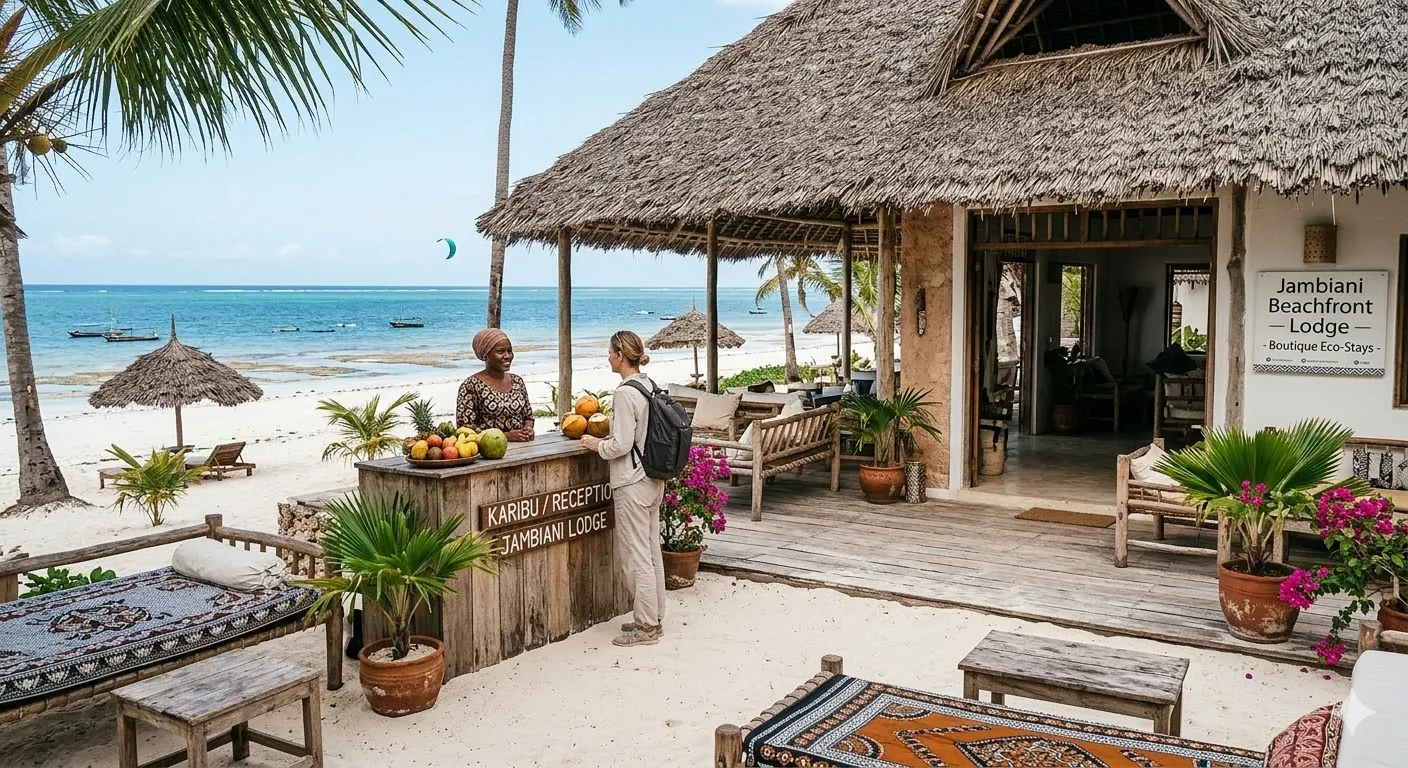
- Accommodation Style – Beach Bungalows: Tucked between the big resorts are smaller, locally-run bungalows. These are usually wooden or coral-stone structures with palm-thatched roofs (Makuti). They offer a “feet-in-the-sand” vibe where you’re only 20 steps from the ocean.
- The Difference: Kendwa has a wider beach and is more upscale/resort-heavy. Nungwi is more “vibrant” and crowded, with more backpacker hostels and independent restaurants.
3. Paje & Jambiani: The “Barefoot Boutique” East Coast
Best for: Kitesurfers, digital nomads, and “slow travel” enthusiasts.
The East Coast is the home of the “Eco-Lodge” and the “Boutique Villa.” Because the tide goes out very far here, the hotels focus heavily on design, pools, and “vibe.”
- The Experience: You’ll find lots of white-washed walls, turquoise accents, and “shabby-chic” furniture. These stays often focus on sustainability—using solar power, greywater recycling, and locally sourced furniture.
- Accommodation Style – Kitesurf Lodges: In Paje, many accommodations are designed specifically for the sporting crowd. They feature gear storage, “chill-out” zones with beanbags, and social communal tables for dinner.
- Accommodation Style – Traditional Guest Houses: In Jambiani, you can stay in small houses integrated into the village. This is the best way to support the local economy directly.
- Pro Tip: Look for a “Beachfront Boutique” stay with 10 rooms or fewer. You’ll get personalized service and a much quieter experience than the big northern resorts.
4. Michamvi & Matemwe: The “Secluded Luxury” Escapes
Best for: Honeymooners, couples, and those who want total silence.
If you want to feel like you’re the only person on the island, these are your spots.
- The Experience: These areas are dominated by Private Villas and High-End Retreats. Often, these are “fenced-in” tropical gardens where each room is a standalone cottage (Banda) with its own private path to the beach.
- Matemwe: This is the most “wild” beach. The sand is like powder, and the hotels here are often owned by diving enthusiasts because it’s the closest point to the Mnemba Atoll.
- Michamvi: This peninsula is for the “aesthetic” traveler. Stays here are often ultra-stylish, featuring infinity pools that look out toward the sunset (at Michamvi Kae) or the famous Rock Restaurant (at Michamvi Pingwe).
5. The “Zanzibar Checklist”: 5 Things to Verify Before Booking
To ensure your “perfect stay” doesn’t turn into a nightmare, always check these five things on the hotel’s listing:
- Air Conditioning vs. Ceiling Fans: Zanzibar is humid. If you aren’t used to the heat, a “fan-only” room in December can be brutal.
- The Tide Map: If staying on the East or South coast, check how far the water retreats. Many hotels provide “Tide Tables” in the lobby.
- Generator Access: Power outages (load shedding) can happen. Higher-end hotels have backup generators; budget bungalows may not.
- Mosquito Protection: Does the bed have a high-quality, hole-free net? This is non-negotiable for comfort and health.
- Wi-Fi Strength: If you are a digital nomad, be careful. “Beach Wi-Fi” is notoriously spotty. Stone Town and Paje have the best connectivity on the island.
Still Unsure Where to Drop Your Bags?
Zanzibar has everything from $20-a-night hostels to $2,000-a-night private islands. The “best” place depends entirely on what you want to see when you wake up.
- Want to wake up to the sound of the Adhan and the smell of spices? Book Stone Town.
- Want to step out of bed and directly into the ocean? Book Nungwi or Kendwa.
- Want to watch kitesurfers fly by while you sip a coconut? Book Paje.
👉 Get in touch with us. Tell us your budget and your vibe, and we’ll give you a curated shortlist of the best accommodations that actually live up to the photos.