
Zanzibar is often described as a paradise, but “paradise” is a fragile thing. With the rapid growth of tourism comes a significant responsibility to protect the very things that make the island special: the vibrant coral reefs, the ancient Jozani forest, and the close-knit Swahili communities.
For the modern traveler, “Sustainability” isn’t just a buzzword—it’s a way of ensuring that the Zanzibar we love today still exists for the next generation. From marine sanctuaries to women-led cooperatives, here is how you can experience the island while supporting the conservation efforts that keep it thriving.
1. Chumbe Island: The Gold Standard of Conservation
If you want to see what a perfectly preserved ecosystem looks like, you have to look at Chumbe Island Coral Park. This is a private, non-profit marine protected area that has become a global model for sustainable tourism.
- The Conservation: The island is home to a “no-take” coral reef sanctuary (no fishing, no anchors) and a forest reserve. Because of this protection, the reef is one of the most biodiverse in East Africa, serving as a “nursery” that repopulates the surrounding overfished waters.
- The Experience: You can visit for a day trip or stay in one of their seven “Eco-Bungalows.” These structures are architectural wonders—they collect their own rainwater, use solar power, and have composting toilets to ensure zero runoff into the reef.
- The Impact: 100% of the proceeds from tourism fund the park’s management and their extensive environmental education program for local school children.
2. Protecting the Red Colobus at Jozani Forest
The Jozani Chwaka Bay National Park is the last remaining sanctuary for the Zanzibar Red Colobus monkey, a species found nowhere else on Earth.
- The Conservation: For decades, these monkeys were threatened by habitat loss. Today, the park is a protected stronghold. The conservation model here is unique because it is “community-based.” A portion of every entrance fee goes directly into a fund for the surrounding villages to build schools, clinics, and clean water systems.
- The Experience: Walking through the mahogany trees and the eerie, beautiful mangrove boardwalks, you’ll see the monkeys leaping through the canopy. Because they have been protected for so long, they are remarkably relaxed around humans, allowing for incredible (and respectful) photography.
3. Sea Turtle Rescue: Nungwi’s Sanctuaries
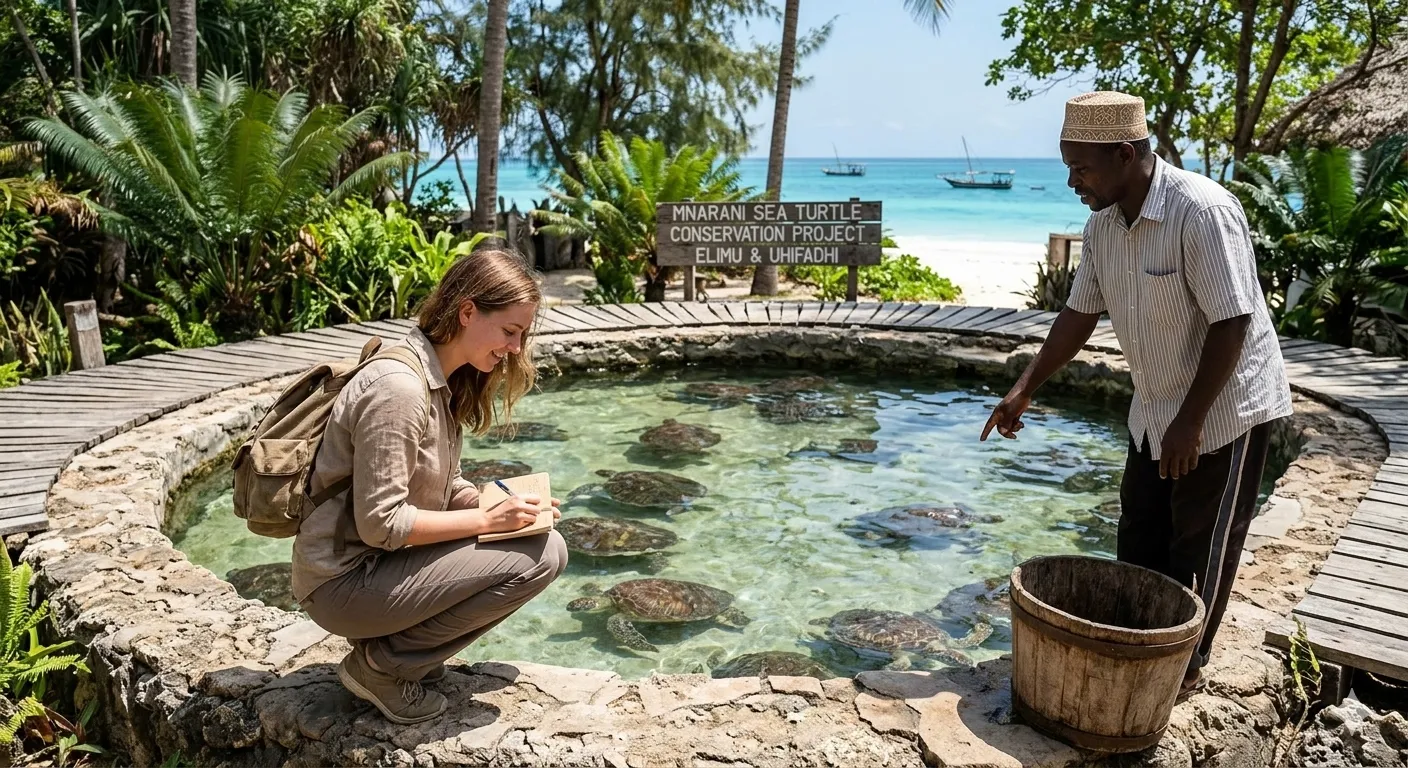
In the northern tip of the island, two major projects—Mnarani Marine Turtle Conservation Pond and Baraka Natural Aquarium—work to protect green sea turtles.
- The Conservation: Historically, turtles were hunted for their meat and shells. These projects work with local fishermen to “buy back” turtles caught in nets. The turtles are brought to these natural tidal lagoons, treated for injuries, and released back into the ocean during an annual festival.
- The Experience: Visitors can see the turtles up close and even help feed them seaweed. It’s a powerful educational moment, especially for families, to see the direct impact of plastic pollution and fishing nets on marine life.
4. The Seaweed Center: Empowering the East Coast
Sustainability isn’t just about animals; it’s about people. In Paje, the Seaweed Center provides a glimpse into the lives of the women who farm the “ocean fields.”
- The Conservation: Seaweed farming is the second-largest industry on the island after tourism. The Center helps women move up the “value chain”—instead of just selling raw seaweed for pennies, they learn to process it into high-end soaps, oils, and scrubs.
- The Experience: You can take a tour to see how the seaweed is harvested at low tide and then visit the factory to see the production process. It’s a masterclass in social sustainability and female empowerment in a traditional society.
5. Mangrove Restoration: The Lungs of the Coast
Mangroves are the unsung heroes of Zanzibar. They prevent coastal erosion, filter the water for the coral reefs, and act as massive carbon sinks.
- The Conservation: Many areas, particularly around Chwaka Bay and Uzi Island, have seen massive replanting efforts led by local youth groups. They are fighting back against the illegal cutting of mangroves for charcoal and construction.
- The Experience: Taking a low-impact kayak tour through the mangrove channels is the best way to appreciate this ecosystem. It’s a quiet, meditative experience that highlights the “green” side of the “blue” island.
6. The “Plastic-Free” Movement
Zanzibar has a strict ban on plastic bags, but the challenge of plastic bottles remains. Many forward-thinking hotels and operators are now part of the “Zanzibar Plastic-Free” initiative.
- The Conservation: Look for the Ozti or Zanzibar Water refill stations. Many lodges now provide reusable glass bottles and filtered water to discourage the “buy-and-toss” culture of plastic.
- The Experience: As a traveler, the best thing you can do is bring a high-quality reusable water bottle. It’s a small change that keeps thousands of plastic bottles out of the island’s limited landfill space.
How to Be a “Pole Pole” Traveler (Sustainable Tips)
In Swahili, Pole Pole means “slowly.” Sustainable travel is about slowing down and being mindful.
- Respect the Reef: Never touch or step on coral. Even the slightest touch can kill a colony that took decades to grow.
- Support Local Artisans: Instead of buying mass-produced souvenirs, look for the “Made in Zanzibar” label. Support the woodcarvers, weavers, and spice farmers directly.
- Conserve Fresh Water: Fresh water is a luxury on a coral island. Be mindful of your shower time and towel re-use.
- Ask Before Tipping: While tipping is appreciated, some conservation areas have communal tip boxes to ensure all staff—from the cleaners to the guides—are treated equally.
Join the Movement
Zanzibar’s beauty is a gift, and protecting it is a shared journey. By choosing to visit conservation projects and supporting eco-conscious businesses, you are directly contributing to the survival of the Swahili coast.
- Want to visit the most ethical marine sanctuaries?
- Looking for an eco-lodge that aligns with your values?
- Interested in a community-led tour that supports local villages?
👉 Get in touch with us, and we’ll help you plan a trip that leaves a positive footprint on the beautiful island of Zanzibar.